

Onyx was describing its own internal productivity measure after connecting scheduling, production reporting, and run history in DELMIAWorks. The video does not define the calculation method or measurement period.
What is the result?
Onyx Hose & Tube says connected scheduling, production reporting, and run history improved its internal productivity measure from the low 80s into the mid-to-high 90s. The figure is customer-reported. The practical mechanism is the ability to compare performance by line and connect production activity with costing and finance.
The operating situation
Onyx manufactures a wide range of thermoplastic hose and tube products, including co-extrusion and tie-layer work. That product variety makes costing, scheduling, and run history difficult to manage with disconnected information.
The company also had to react quickly to raw-material price changes and currency movement. A current inventory value was not enough for quoting if input costs were expected to change again before an order could be produced.
What DELMIAWorks changed
- Forecast costing: Sales could work from a forward-looking cost that reflected recent price increases instead of relying only on today's inventory value.
- Shift and line visibility: Supervisors entered daily production data and could review employee and line efficiency by shift, week, month, or year.
- Run history: Teams could compare how the same product performed on different lines and avoid repeating a poor machine assignment.
- Operations-to-finance continuity: Material use, work-order completion, and production performance flowed through to the balance sheet and profit-and-loss statement.
The customer-reported outcome
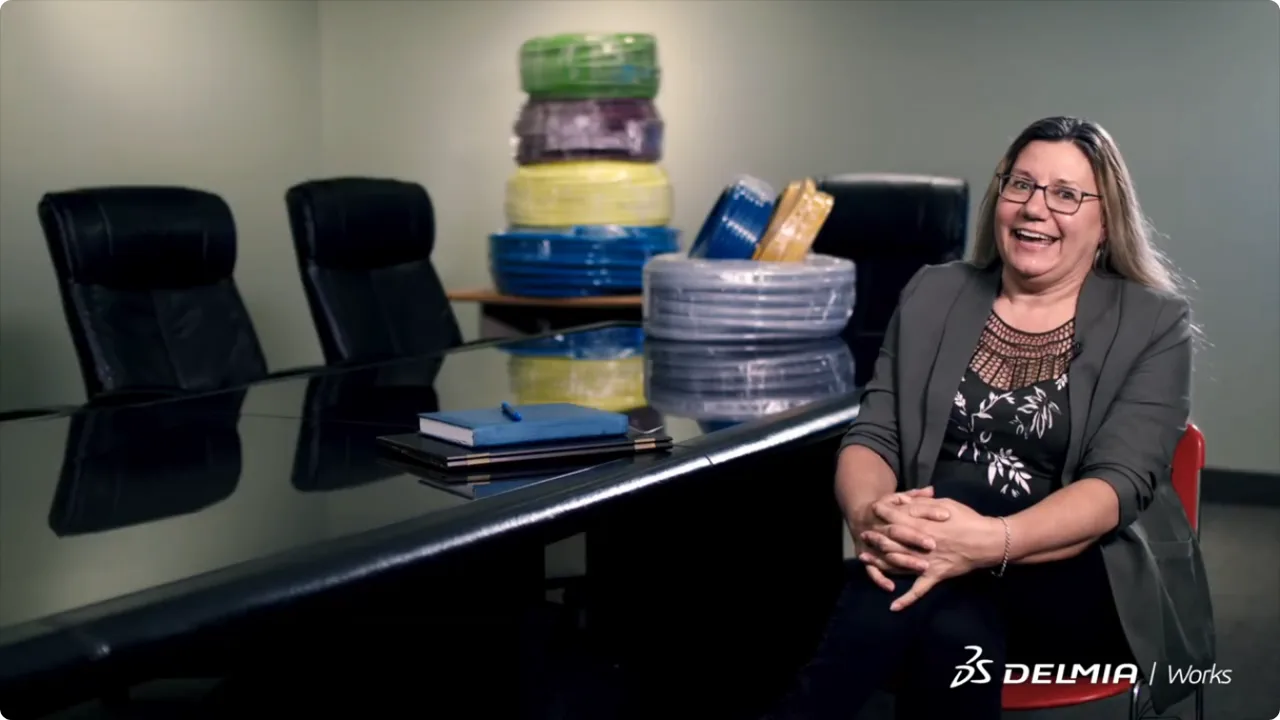
“It's improved our productivity from low 80s to mid to high 90s.”
Onyx Hose & Tube customer story, official DELMIAWorks video
The important distinction is what this statement supports. It is evidence of Onyx Hose & Tube's experience, not a universal performance promise. The operational mechanism described in the story is the value: connected information made a faster or better-informed decision possible.
Watch the complete customer story from the official DELMIAWorks YouTube channel.
What another manufacturer can take from this story
- Define the operating baseline first. A productivity improvement matters only when the shop agrees on what is being measured and how consistently data is captured.
- Connect production and finance. The strongest signal in this story is that shop-floor activity did not stop at a production report. It affected costing and financial visibility.
- Use history to improve the next run. Comparing performance by line turns ERP history into a practical scheduling decision.
How Morphos 3D would validate the fit
A customer story is a useful proof point, but it is not an implementation plan. Morphos 3D starts with the current workflow, the business decision that needs better evidence, the systems that own the data today, and the measurable baseline. That fit assessment determines whether DELMIAWorks should connect the workflow and which phase should come first.
Start with the DELMIAWorks Fit Assessment or talk with an ERP specialist.